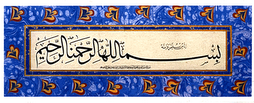
In the name of Allah, the Most Gracious, the Most Merciful....

In the name of Allah, the Most Gracious, the Most Merciful....

Introduction

This is a journal of my experience in life as as a Muslim convert. I share about the things I learn, question, reflect upon, achieve, and experience on the path of Islam. [96:1-5] Read! In the name of your Lord who created - Created the human from something which clings. Read! And your Lord is Most Bountiful - He who taught (the use of) the Pen, Taught the human that which he knew not.

About Maryam

I study Islamic Studies and International Business at the university, and enjoy studying political science and languages as well. On my free time I study Arabic, Hebrew, and religion. I am Guatemalan and American.I am also Spanish, Italian Scottish and German. I also speak Spanish, Japanese, and Italian. I love to learn about other cultures. I also love to learn about nutrition and fitness. I am very active in sports, outdoor activities and exercise, and flamenco dance class. I am fascinated with my country, Guatemala, it is such a beautiful place, full of variety and rich culture and history, especially the Maya. I LOVE to cook and I try to have a well-balanced diet. Someday I also hope to learn Amharic, Persian (Farsi), and Aramaic and I hope to travel to all of the middle east and Ethiopia, Japan, and Sicily.

Knowledge and Understanding

[2:269] He [Allah] grants wisdom to whom He pleases; and he to whom wisdom is granted indeed receives a benefit overflowing. But none will grasp the Message except men of understanding.
[20:114] High above all is Allah, the King, the Truth. Do not be in haste with the Qur'an before its revelation to you is completed, but say, "O my Sustainer! Increase my knowledge."
[3:190-191] Verily in the creation of the heavens and the earth, and the alternation of night and day - there are indeed signs for men of understanding; Men who remember Allah, standing, sitting, and lying down on their sides, and contemplate the creation of the heavens and the earth (with the thought) "Our Lord! Not for nothing have You created (all) this. Glory to You! Give us salvation from the suffering of the Fire."
[39:9] ...Say: Are those equal, those who know and those who do not know? It is those who are endued with understanding that remember (Allah's Message).
[58:11] ...Allah will raise up to (suitable) ranks (and degrees) those of you who believe and who have been granted knowledge.

Sheikh Mishary Al Afasy

He came to my mosque in the USA to recite from the Qur'an recently and when he prayed salat he cried. My first time to pray the late night prayer during Ramadan was when I went to Kuwait in the Grand Mosque and Mishary was reciting Surat Maryam! Sub7anAllah... Here is a video of nasheed (Islamic poetry) from him. He has been blessed with a beautiful voice for praising Allah, masha' Allah. You can see some of his recitations of the Qur'an at my mosque at this site - http://www.youtube.com/watch?v=sg2QYHmRfY0&mode=related&search=

Wednesday, August 29, 2007

LOVE حب

Love... Some people say that there are different kinds of love. I say there is only one. Just as there is only one God. If it is true that God is love, and it is also true that there is only one God, then we could conclude that there is only one love. This would make sense if we considered the concept of love as something that cannot have a limit on it. Imagine a love with limits. What kind of love would that be then? I would like to think that all love is without conditions, that this is a necessary trait of love. It cannot be separated from the concept of love. You either love or you don't. There is no in between. If you consider God love, then this is all the more true, as you should see love as you see God, as something that has no limitations and that love never fails. It might go through your head the question, well, what about the difference between brotherly love and romantic love?? Surely they are not the same love. However, they actually are one and the same. You can love a friend, a sister, a mother, a wife, a teacher, anyone, and it is all love. The difference is not the kind of love. The difference is that with a wife you love her AND you are also attracted to her among other things while a teacher you might love AND admire and respect him or her. So the love is the same, it is the other elements that contribute to the different feelings. When we truly love, we would give our lives for those we love. Like Jesus pbuh said; "No man hath a greater love than this; that a man lay down his life for his friends." Now here we have a love, with no limits, not even death. Love is stronger than death, it is stronger than anything, it is of God and only of God and it is God. The greatest commandments that Moses gave to mankind, pbuh, was "Love the Lord Your God with all your heart and all your mind and all your soul. And love your neighbor as you love yourself."


1 Corinthians chapter 13 (TEV)

1 I may be able to speak the languages of human beings and even of angels, but if I have no love, my speech is no more than a noisy gong or a clanging bell.

2 I may have the gift of inspired preaching; I may have all knowledge and understand all secrets; I may have all the faith needed to move mountains-but if I have no love, I am nothing.

3 I may give away everything I have, and even give up my body to be burned-but if I have no love, this does me no good.

Love is patient, love is kind.
It does not envy, it does not boast, it is not proud.
It is not rude, it is not self-seeking.
It is not easily angered, it keeps no record of wrongs.
Love does not delight in evil, but rejoices with the truth.
It always protects, always trusts, always hopes, always perseveres.
Love never fails.
I Corinthians 13:4-8


The Holy Quran:

5:54

O you who believe! Whoever from among you turns back from his religion (Islâm), Allâh will bring a people whom He will love and they will love Him; humble towards the believers, stern towards the disbelievers, fighting in the Way of Allâh, and never afraid of the blame of the blamers. That is the Grace of Allâh which He bestows on whom He wills. And Allâh is All­Sufficient for His creatures' needs, All­Knower.

3:31

Say (O Muhammad SAW to mankind): "If you (really) love Allâh then follow me (i.e. accept Islâmic Monotheism, follow the Qur'ân and the Sunnah), Allâh will love you and forgive you of your sins. And Allâh is Oft-Forgiving, Most Merciful."

The Webster Dictionary meaning of the word "Love" is:

"passionate, warm attachment, affectionate"

The Holy Qur'an lists these attributes describing God , along with much more ,
for example , in the Holy Qur'an , our Creator is addressed as:

"Compassionate , Merciful , the Helper , the Nourisher , the Generous , the Guide ,
the Loving (al-Wadud in Arabic often translated into English as "the Kind
One"), the Raiser of the Dead , the Patient"

Thus showing how the God of Islam which is the same God of Abraham , Moses and
Jesus , is in fact a God of Love .

Besides God being Defined as Love in the Holy Qur'an , we also see quotes of
how God Gives us Love in the Qur'an:

"... God loves the doers of justice." {Holy Qur'an 60:8}

"... God loves those who are fair (and just). " {Holy Qur'an 49.009}

" On those who believe and work deeds of righteousness, will (Allah) Most
Gracious bestow love. " {Holy Qur'an 19:96}

"...God loveth those who make themselves pure. " {Holy Qur'an 9:108}

"... For God loves those who put their trust (in Him). " {Holy Qur'an 3:159}

God in the Qur'an also gives Love unconditionally:

"It may be that God will ordain love between you and those of them with whom
ye are at enmity. Allah is Mighty, and Allah is Forgiving, Merciful. " {Holy
Qur'an 60:7}

" And among His Signs is this, that He created for you mates from among
yourselves, that ye may dwell in tranquillity with them, and He has put love
and mercy between your (hearts): verily in that are Signs for those who reflect. "
{Holy Qur'an 30:21}

"...for ye were enemies and He joined your hearts in love, so that by His
Grace, ye became brethren; and ye were on the brink of the pit of Fire, and
He saved you from it. Thus doth Allah make His Signs clear to you: That ye
may be guided. " {Holy Qur'an 3:103}

" And He is the Forgiving, the Loving, " {Holy Qur'an 85:14}

The Qur'an reveals this false assertion that God only loves the Jews or the
Christians:

"And the Jews and the Christians say: We are the sons of God and His beloved
ones. Say: Why does He then chastise you for your faults? Nay, you are
mortals from among those whom He has created, He forgives whom He pleases
and chastises whom He pleases; and God's is the kingdom of the heavens
and the earth and what is between them, and to Him is the eventual
coming." {Holy Qur'an 5:18}

This is not a attack on either Faith , it only rebukes
the claims by Jews who say 'only the children of Israel
are the chosen people' or the Christians who say 'all
non-Christians are demons'

This verse is only explaining that we are all from God
and God loves us all .

"Those who believe (in the Qur'an), those who follow the Jewish (scriptures), and the Sabians and the Christians,- any who believe in God and the Last Day, and work righteousness,- on them shall be no fear, nor shall they grieve. " {Holy Qur'an 5:69}

There are many more examples but this is to demonstrate that
True Love is both equally given as well as taken . Let us love each other ,
stand together as partners , praying to God and enjoying the Love and guidance
manifested in the Holy Qur'an.


Friday, August 17, 2007

The Woman Caught in Adultery

I wanted to tell you about something that I found very interesting and inspiring. My mother, when she was younger than me, maybe about 18 or 19, was asked by one of the preachers to give a message from the Injil to the people on the Christian Radio to the thousands of listeners in Guatemala. When they asked her what teaching she thinks she might talk about on the radio, she simply says to them, I don't know. I trust in God and when I come to the radio that day, God will guide me with what I am to speak about. When she came to the radio station, she sat behind the microphone and flipped through her bible after her prayer. She saw many stories with good message to talk about, but she chose to talk about a story in the Gospel of John 8:3-11, the story about the prostitute that is very well-known among the Christians today because it has many important messages to the believers. As you will read below, it has a very meaningful and spiritual message, that became even more meaningful to me after I had studied it and listened to another person give a sermon about it; Mr. Ahmed Deedat. So you can get a better idea of what I will be talking about, here is the passage from that chapter:
8.2 Early in the morning he came again to the temple; all the people came to him, and he sat down and taught them. 8.3 The scribes and the Pharisees brought a woman who had been caught in adultery, and placing her in the midst 8.4 they said to him, "Teacher, this woman has been caught in the act of adultery. 8.5 Now in the law Moses commanded us to stone such. What do you say about her?" 8.6 This they said to test him, that they might have some charge to bring against him. Jesus bent down and wrote with his finger on the ground. 8.7 And as they continued to ask him, he stood up and said to them, "Let him who is without sin among you be the first to throw a stone at her." 8.8 And once more he bent down and wrote with his finger on the ground. 8.9 But when they heard it, they went away, one by one, beginning with the eldest, and Jesus was left alone with the woman standing before him. 8.10 Jesus looked up and said to her, "Woman, where are they? Has no one condemned you?" 8.11 She said, "No one, Lord." And Jesus said, "Neither do I condemn you; go, and do not sin again."

I found it interesting to go back and read in the Injil (Gospels) after I had taken this class at the university about the Injil and the studies of the scholars attempting to find what may be historically attributable to Jesus' saying and life or not. Some scholars do not believe that there is enough evidence in the Gospels to attribute this passage to Jesus because it is only found in one Gospel (John) and that many scholars believe came later than the other Gospels, although they do not rule out that it could be that John had an additional source that may have been even older than the sources the other Gospels used to gather information about Jesus.
But in any case, whether it was or not, we might never truly know.

But my point is not whether it came from Jesus or not, but instead, my point is to show that this story may show us something true about the prophethood of Jesus and something that may show that this story is plausible within his historical context as well. It is also a positive message even if that is not the case after all.

Now that I have learned a little bit about how scholars analyze these biblical stories, I feel like I have an improved, more open-minded perspective on scriptural study, whatever book I may be studying.

Here we have this unnamed woman, there are many "unnamed individuals" in the Gospel by the way, and most are usually the "good guys" in a sense, which may have a symbolic message within itself, but once again I digress. Anyway, this woman had been caught red-handed essentially in the act of adultery. The elders were ready to give her the punishment and tested Jesus by asking him what he thinks they should do with this women who had been witnessed as adultering. They knew if he answered "kill her," he would have a problem. If he answered, "let her go," then he would also be saying something controversial. While one answer would be in accordance with the Torah laws, the other might be against Roman law as Rome was the colonial power at the time, and he could get into trouble with them. This is one example of something we would not have understood or picked up on had we not understood the historical context. But instead of answering their questions, he bent down and drew in the ground. And the passage shows that he spent time writing, more time than it would take just to write one word or make a doodle.

That is interesting in itself, but that only leads in to the point I want to make. The other day, I heard a message given by Mr. Ahmed Deedat, a Muslim teacher and scholar. He analyzed this same story from the Gospel of John. He made an interpretation and educated guess as to what Jesus may have been drawing in the sand that clicked than any other I had ever heard even from any Christian scholar or pastor or preacher or from anyone for that matter. It had a big impact on me to hear this interpretation. I had often asked myself, as many people might as they read this passage from John, what might Jesus have been writing in the ground? I have heard many interesting symbolic answers to this but none like that of Mr. Deedat.

He supported this interpretation by putting this story within the framework of the historical context of when and where this event could have happened. He reminded the listeners that in this time in Jewish tradition, it was completely normal and orthodox to have discussions and healthy debates over interpretation of Torah law. It was a healthy way for Jews to study religion in that time and even into today. Jesus practiced this and we find it many places in the Gospels, although many pastors explain this possibly erroneously as Jesus making outlandish arguments with the Jews or being at odds with Judaism.

If it is so that Jews often interacted this way within their community, then it might be expected that these Pharisees and scribes present, watching Jesus drawing in the sand ignoring their questions, would feel inquisitive about Jesus' actions and be compelled to ask him what he was writing. They might also find it strange that he was not engaging in their debate about the woman. It is not like Jesus would shy away from a testing question, there are many similar instances in the gospels where Jesus addresses similar types of questions.

Naturally, the eldest elder would be the one to approach Jesus first, just as it is stated in this passage. What Deedat proposed is that Jesus, being a prophet and knowing privileged information, may have been revealed about the sins of these elders, and their names. So it is plausible that he may have been writing each of their names and the sin they most recently commited, and since we are all imperfect, all of them had something to seek forgiveness for. As the first elder approached, he may have seen his own name staring him in the face in the dirt, with his sin written next to it. He may have been astonished and immediately convicted in his heart, and would naturally have taken off, hopefully to repent himself or to reflect on what he had witnessed. As the other elders saw this, possibly one by one approached Jesus, saw his respective name written and dropped his stone and walked away from judging that woman. What a powerful image.

What is even more astonishing is that this theory came from not a Christian or even a Jewish, but in fact from a Muslim scholar! The first time I hear such a powerful analysis of this passage and it was someone that was not even Christian. Needless to say this story always left me thinking. Many of the gospel stories are written in a way to make you think and reflect. There is a reason the writer of this story had Jesus doing something that was unexpected whether the story actually happened this way or not. This was done possibly for the very purpose of making this passage memorable or to elicit an active mental response and wake us up to reflecting on the message.

At any rate, I always say whenever reading scripture, it is important to reflect for oneself. We must use the brain God gave us to think as we read, to read actively in a sense and not passively as though you are reading a novel where each and every detail and message is explained for you and the conclusion is given clearly. This is not necessarily the case in scriptures. We must read and reflect. We must ask ourselves the hard questions we must question what we read and give it thought, not just read it through carelessly or superficially, or take what others have said and just accept it as fact, but at the same time learning what scholars have deduced is also helpful in expanding our perspectives and understanding.


My First Semester (فصل) at the University (جامعة)

AlhamdulEllah, I finally finished my busy quarter at the University of Washington. I love my university so much. I am very happy there, but this quarter was difficult especially because I took 4 classes at the same time and one of the classes was 4 hours everyday with 6 hours of study time everyday after school. But alhamdulEllah, I did well with them. Today I had my final exams. I had a very good experience this summer. I met a lot of nice people and made new friends. I learned a lot about religion and my Arabic is improved.

One of my courses this summer was the study of "The Gospels and Jesus of Nazareth (Al Injil wa Issa min Nazaret)." I learned about many of the scholars that attempted to learn more about the historical Jesus, based on the historical context he lived in and based upon the many texts and gospels that they have at their reach. I learned also about how the gospels may have been written and how scholars show what may have been added, changed or may actually be attributable to Jesus.

The Gospels consist of Mark, Matthew, Luke, and John. We also looked at some gospels that were not included in the bible we know today, such as the Gospel of Peter and the Gospel of Thomas. We studied about the theories that scholars have about which may be the phrases that can be best traced back to the time of Jesus from these texts. It was very eye-opening to learn about what people were like in Jesus' time and how they thought. It is so much more different than we would like to think. For example, within the historical context of Jesus' life, ritual animal sacrifice was not only normal but common throughout various groups, even pagans. Thus for the Jews to have this ritual for atonement and purity, it may not have seemed out of place at all.

On the other hand, something that is as common today as the Sabbath day, which is Sunday for most Christian sects and Saturday, Shabbat, for the Jews for the historical context of Jesus' lifetime, this observance of the Sabbath would have set the Jews apart from others and been a very curious custom for many outsiders. So this helps to show that it is hard to depict Jesus without really understanding the context in which he lived because we are looking through a biased lens and the knowledge of what happened after his crucifixion also can get in the way of getting a purer idea of what Jesus may really have been like and what his message consisted of truly and why he would have been crucified. At any rate, in a nutshell, it was a very fascinating class and I learned a lot.

Sunday, July 15, 2007

The Shahada

2:136 Say: "We believe in God, and in that which has been bestowed from on high upon us, and that which has been bestowed upon Abraham and Ishmael and Isaac and Jacob and ,their descendants, [111] and that which has been vouchsafed to Moses and Jesus; and that which has been vouchsafed to all the [other] prophets by their Sustainer: we make no distinction between any of them. [112] And it is unto Him that we surrender ourselves."

قُولُواْ آمَنَّا بِاللّهِ وَمَآ أُنزِلَ إِلَيْنَا وَمَا أُنزِلَ إِلَى إِبْرَاهِيمَ وَإِسْمَاعِيلَ وَإِسْحَقَ وَيَعْقُوبَ وَالأسْبَاطِ وَمَا أُوتِيَ مُوسَى وَعِيسَى وَمَا أُوتِيَ النَّبِيُّونَ مِن رَّبِّهِمْ لاَ نُفَرِّقُ بَيْنَ أَحَدٍ مِّنْهُمْ وَنَحْنُ لَهُ مُسْلِمُونَ (2:136)

17:36 And never concern thyself with anything of which thou hast no knowledge: [45] verily, [thy] hearing and sight and heart - all of them - will be called to account for it [on Judgment Day]!

وَلاَ تَقْفُ مَا لَيْسَ لَكَ بِهِ عِلْمٌ إِنَّ السَّمْعَ وَالْبَصَرَ وَالْفُؤَادَ كُلُّ أُولـئِكَ كَانَ عَنْهُ مَسْؤُولاً (17:36)


I chose these two verses from the Holy Quran because they both relate to what I want to share with you about today.
It took me a while before I said the shahada even though with my heart, my mouth and with my heart I had the Muslim faith in me from the first time I heard a Surah from the Quran recited. However, I do not like to just accept what people say without any knowledge or reflection whatsoever. For example, someone can come up to you and say "do this!" Allah commands it. And yes, we should hear Allah's command and obey without hesitation, but when someone just tells you something, you should naturally study for yourself. Even if they say, its in a hadeeth or its in the Quran. We cannot tell Allah in that day that we did it because it was in the Quran because maybe He will ask us, really? Where in the Quran is that? Or, did you read it for yourself to make sure? Also, someone might tell you to do something that sounds correct and right, but that is against what is clearly stated in the Quran, then you owe it to yourself to reflect and investigate further before doing it. We all have to answer to Allah one day for everything we do here and now.

That is one reason Allah gave us the miracles of our minds. We cannot depend on others to feed us information on what to do and how to live, we must also do our own searching within our own ability. Just like the verse above states, we will be accountable for our hearing, sight, and hearts one day. So we cannot tell Allah that we used someone else's sight to get by in life. If Allah asks me, why did you do this or that? I want to be able to give him a good answer. I cannot just tell him "someone told me to do it." Sometimes it is hard not to just do what everyone else does, even within the religion. It has become a part of tradition that even when it might be wrong, people do it because everyone else does it. But we are Muslim and we must honor Allah's word and His laws and understand what they are. It is part of our duty as believers even if people persecute us for being this way. It is hard to go against tradition, but we will never make a difference if we do not stand for what is right. That is the only way things can change. Maybe if we trust in Allah to give us the strength, we can help other people to also see the truth.

When I heard what the traditional shahada was, based on hadith, it seemed to conflict with the shahada of all those mentioned in the Qur'an; the Queen of Sheba, Abraham (pbuh), Jacob(pbuh), Issac(pbuh), Ishmael (pbuh), just to name a few. It seemed when asked by Allah to submit to Him, they just said, "we submit to Allah", "We hear and we obey". That's all. Of course in different words, but that was the gist of it. And that made a lot of sense to me. It was a declaration of the faith in Allah and submission to Him, which is the essence of Islam. I had a lot of questions about it, but I did not concern myself with them because if Mohammad (pbuh) really did ask of us to say the shahada in this way, I cannot go against that. My only question that continued however, was something that I felt was going against the teaching from the Quran.

I thought to myself, why is the shahada I am expected to say, different from what others said in the Quran? I knew that it came from hadith, and I would have said it right away had it not been that based on what I had read in the Qur'an, that we cannot witness what we have not been present to see, how then could I say that I witness that Mohammad (pbuh) was Allah's messenger? It almost seemed blasphemous for me to say something like that when I never witness it myself. In English, to witness means to see something with your own eyes. For example, when you see a crime committed, you are a witness to that crime. Or when someone signs a contract, you sign your name also because you are with them as a witness. It seemed that it contradicted the Quran to say that I witness that because a few times in the Quran it talks about that Allah is the best witness, but Allah sees everything. I don't. However, as I did further study, I saw that the word in Arabic "shahada" has many related meanings, and may not necessarily mean the same thing as "physical witness." It can also mean to attest or to confirm, and to testify something that you see OR believe. Also, in one translation of a verse in the Quran it said that Allah is enough as a witness. When I read that, I thought, if he is enough as a witness, then why should I say that I witness in the shahada testimony? But in another translation, it said simply that there is no witness like Allah. And that makes sense, because Allah is the best witness, because he can witness what is inside our hearts. Who can say he can do something like that??? And if it is true that he is enough as a witness, then why does it say in Surah Baqarah in Ayat 143, that we can bear witness to the truth through our lives? So after that, I felt peace in my spirit that if I said "ashhadu ana...." it would make sense because I do attest to that, and I do believe in that. So, in conclusion, I said the shahada in Arabic just as most Muslims say it, but in English, i said it using I attest, and confirm.

I feel that the Quran was meant for all mankind and that it is our guide and yes, it is important to consult scholars and read and study, but I want to make it clear that I believe that we should use it and apply it to our lives. We should not be afraid of reading the Qur'an ourselves. Do you honestly think Allah would have made the book only for the smartest or most skilled people? It is for us all. Some people are scared to read it for fear or misunderstanding it or misinterpreting it. That is fine, but don't be afraid about it. Pray before you read, ask Allah for guidance and trust in His word. Yes the Qur'an is beautiful with millions of messages for us, but the Quran is also clear and complete. It helped me so much in so many ways until now and I continue to reflect upon it everyday. I also think it is wise to consult scholars on topics and use other sources for support, but I'm jut saying that the Quran is for us all and should be held higher than all sources of knowledge in the world. It is a miracle in itself and there is nothing that comes even close to it.

I said the shahada to my brother in Islam, Adnan, who is from Saudi Arabia of Turkish descent. He was the first person to teach me about Islam. He was so patient with me and he and his family helped me so much. He is wise, knowledgable, and humble and has a very big heart. May Allah bless them all.

Islam we have to remember has always existed even before the Quran was revealed. It is complete submission to Allah, just as it was for Ibrahim and Noah, and Jesus and Mohammad, peace be upon them and all the prophets. If you notice, a lot of times in the Qur'an it points to this important fact. We not only follow the faith of Mohammad (pbuh), but also of the very same faith as the believers before him. So when I became Muslim, I was taking up the very same belief I held before, only that now, I have the Quran as a guide and have believed in the prophet hood in Mohammad (phuh) who came after Jesus (pbuh) and served to help us increase in purity and by him were given the Quran from Allah.

Below I added some additional verses from the Quran that touched me.

4:122 Yet those who attain to faith and do righteous deeds We shall bring into gardens through which running waters flow, therein to abide beyond the count of time: this is, in truth, God's promise - and whose word could be truer than God's?
وَالَّذِينَ آمَنُواْ وَعَمِلُواْ الصَّالِحَاتِ سَنُدْخِلُهُمْ جَنَّاتٍ تَجْرِي مِن تَحْتِهَا الأَنْهَارُ خَالِدِينَ فِيهَا أَبَدًا وَعْدَ اللّهِ حَقًّا وَمَنْ أَصْدَقُ مِنَ اللّهِ قِيلاً (4:122)


4:124 whereas anyone - be it man or woman - who does [whatever he can] of good deeds and is a believer withal, shall enter paradise, and shall not be wronged by as much as [would fill] the groove of a date-stone.
وَمَن يَعْمَلْ مِنَ الصَّالِحَاتَ مِن ذَكَرٍ أَوْ أُنثَى وَهُوَ مُؤْمِنٌ فَأُوْلَـئِكَ يَدْخُلُونَ الْجَنَّةَ وَلاَ يُظْلَمُونَ نَقِيرًا (4:124)

4:125 And who could be of better faith than he who surrenders his whole being unto God and is a doer of good withal, and follows the creed of Abraham, who turned away from all that is false - seeing that God exalted Abraham with His love? [144]
وَمَنْ أَحْسَنُ دِينًا مِّمَّنْ أَسْلَمَ وَجْهَهُ لله وَهُوَ مُحْسِنٌ واتَّبَعَ مِلَّةَ إِبْرَاهِيمَ حَنِيفًا وَاتَّخَذَ اللّهُ إِبْرَاهِيمَ خَلِيلاً (4:125)

2:130 And who, unless he be weak of mind, would want to abandon Abraham's creed, seeing that We have indeed raised him high in this world, and that, verily, in the life to come he shall be among the righteous?

وَمَن يَرْغَبُ عَن مِّلَّةِ إِبْرَاهِيمَ إِلاَّ مَن سَفِهَ نَفْسَهُ وَلَقَدِ اصْطَفَيْنَاهُ فِي الدُّنْيَا وَإِنَّهُ فِي الآخِرَةِ لَمِنَ الصَّالِحِينَ (2:130)

2:131 When his Sustainer said to him, "Surrender thyself unto Me!" - he answered, "I have surrendered myself unto [Thee,] the Sustainer of all the worlds."
إِذْ قَالَ لَهُ رَبُّهُ أَسْلِمْ قَالَ أَسْلَمْتُ لِرَبِّ الْعَالَمِينَ (2:131)

2:133 Nay, but you [yourselves, O children of Israel ,] bear witness [107] that when death was approaching Jacob, he said unto his sons: "Whom will you worship after I am gone?" They answered: "We will worship thy God, the God of thy forefathers Abraham and Ishmael [108] and Isaac, the One God; and unto Him w;1l we surrender ourselves."

a
أَمْ كُنتُمْ شُهَدَاء إِذْ حَضَرَ يَعْقُوبَ الْمَوْتُ إِذْ قَالَ لِبَنِيهِ مَا تَعْبُدُونَ مِن بَعْدِي قَالُواْ نَعْبُدُ إِلَـهَكَ وَإِلَـهَ آبَائِكَ إِبْرَاهِيمَ وَإِسْمَاعِيلَ وَإِسْحَقَ إِلَـهًا وَاحِدًا وَنَحْنُ لَهُ مُسْلِمُونَ (2:133)

Wednesday, July 04, 2007

Purification of the Heart

Salam
My class on Salat and Purification of the Heart was today. It went very well alhamdulEllah. The first class we reflected on a book by Hamza Yousef titled "Purification of the Heart." I enjoyed the talk. The girls brought up some important points about what this means for our life.

My point was that many of us Muslims can get caught up in the details of the rituals of the religion and trying to pursue excellence in them, and get lost in that. As a result, they end up losing track on what Islam is all about in the first place, glorifying Allah and submitting to Him. We become so preoccupied with doing wudu correctly or analyzing hadeeth and other actions that are good in and of themselves, but we forget to address what is in our hearts and how are we being towards those around us. As we fill our hearts with knowledge, we need to keep present what is the reason behind each thing we do and say. What is it that is driving us, as my Imam at my mosque in California, Sheikh Sadullah Khan would remind us to ask ourselves.

We must live Islam at every moment of our life, be constantly conscious and cognizant of God's presence in our lives and our role as his followers. It doesn't matter where we are in our knowledge as Muslims, how much we know at any given point along the line. What matters is we do our best with what we know at each moment to bring honor to Allah and make our best effort to pursue knowledge.

However, if we focus only on perfecting all the details on how to do this or that perfectly, we can risk forgetting that we are Muslims and God does listen to us and we can do things in the name of Allah even if all of what we do is not in perfect form or knowledge at one point or another. Otherwise we will have spent all are lives picking apart all of these things, but never took enough time to actually live day to day as a Muslim in how we interact with each other and reflecting on what is in our hearts and what goodness we can implant into them that would support our ability to worship Allah in all we do.

The point is to have a balance, between the pursuit of knowledge and consciousness of the condition of our heart and example towards others as Muslims. It's like this; I am just starting out as a Muslim, so there are a million things I still have to learn before I will get salat correctly, or do other things well. But I can't wait until I know everything perfectly to start living as a Muslim and applying what I know to my life.

Allah knows our hearts and I know Allah understands where I am now. We can all be kind to others and be compassionate and be patient and have faith in Allah and worship him and commune with Him no matter what level of knowledge we have in Islam now. At the same time we can work our hardest to increase in knowledge and ask Allah for help in this.

May Allah bring you success.

Tuesday, July 03, 2007

Finally at the University


AlhamdulEllah, I'm finally a university student. It has been a long road to get here, but here I am. I had been doing so well in my career and traveled so much for it that there was little chance for me to get my degree until now. I felt I could leave my career at this point safely since I had established a good foundation there so that I can go back to it if I would like to after graduating.

I had been living in California for the past two years and now I am back full time in Seattle attending the University of Washington with a 30 credit load this summer. It feels so great to be here alhamdulEllah. It is a real blessing. I pinch myself as I walk through campus everyday to make sure I'm not dreaming. I'm very thankful for the opportunity to be here. I love my teachers and all my classes. I am taking Intensive Arabic, Managerial Accounting, and Calculus. In a couple weeks I'll be starting a course about the Injil (Gospels). I am a junior, so I have about two years left.

I may go back to California after this quarter however, as I was offered a really really good career opportunity there just recently. But I wouldn't leave until after the quarter is over of course. I know it sounds a little crazy, but we have to go with the curves life throws at us, and take advantage of the opportunities when they are presented to us. If I don't take the job, which I will decide about this week, I will continue to complete my college education now.

I plan to study abroad this fall insha Allah and it looks like I would be studying in Kuwait in the university for one semester. I am very excited about that possibility too. I have to study abroad for one semester for my international business degree and while I'm there, I hope to improve my Arabic and study Islam on my free time.

Other than the university, I found a local mosque where I am taking a class about Salat and Purification of the Heart. I am also going to start in a class on the hadeeth on Thursdays insha Allah.

It is a small world. When I was planning to come back to Washington for the university back in December, I joined the Muslim Student Organization at the University and requested help in finding a Muslim girl roommate. I got an email from a young lady who was interested in being my roommate. However, the plan fell through because I decided not to go back to Washington until June. Just recently, I discovered that this same girl is the one who leads the classes I attend and she is soooo nice and wise. What a small world!!!! I am really happy we have become friends. I have made a few friends already through the classes at the mosque and at school. They are all very admirable people and I have a diverse community of friends forming that I am very thankful to Allah for. This is more than what I had envisioned for my social circle at the university. I feel very happy here, alhamdulEllah.

It is my first time going to school as a Muslim and it's very cool that people even in my Arabic class have expressed interest in attending the mosque with me to learn more about Islam, and that is without me saying anything to them about going, it has come directly out of their hearts. That is sooo cool. AlhamdulEllah. Some of my classmates also ask me questions about Islam and it is a great opportunity to share about it with others. It is cool to see people wanting to understand it and learn more about it. It reminds me of me when I was just starting to know what Islam was. I'm very happy for them that they have open minds and want to seek knowledge.

Knowledge is so key to life.

Take care my brothers and sisters. I love you all.

Monday, May 28, 2007

A Night of Qur'an "Turning to the Light"

Salam
Yesterday at the mosque there was an event for people who converted to Islam recently. I was surprised to see that most of the converts were from Latin America. I met a lot of nice people at the event. Many people including me shared their testimonies about how they found Islam. It was a very inspiring experience. After this event, there was another one about the Qur'an. It went until midnight with Qiyyam ul-Layl which is an 8 rak'at, late night prayer. There was a special guest who recited from the Qur'an too. We had a class about the Qur'an as a cure or remedy. Allah's word has healing powers. It was comforting to know that Muslims also believe that we have authority over sickness through the power of Allah. I learned that Muslims can lay hands even on themselves when they are in sickness or pain and recite from the Qur'an for healing. Faith is just as significant in Islam as in Christianity or Judaism. Faith is fundamental as is love. It was a wonderful Sunday. While I was at the event for converts, I picked up a few reading materials in Spanish for my family in Guatemala. They were curious about Islam. I'm excited to send it to them.

Saturday, May 26, 2007

My trip to Guatemala


I finally went to Guatemala to see my family. It was the first time I had seen them since I became Muslim. They were so open to it and they were all very happy. I made du'a and recited Al-Fatiha for my grandparents at the cementary too. The trip was sooo nice. It went by too fast. I saw all four of my cousins. I love my family so much. Everyone is so sweet and admirable. I miss them so much. Guatemala is absolutely beautiful. The culture is amazing as well as the people as well as the food. I can't wait to go back. It had been so long since I last visited. We visited the mosque there. It is breathtaking. You can see my photos of my family and Guatemala at http://maryam.photoblog.com/
Be forewarned, most are just of my family cuz I was so excited to see them, I almost forgot to take pics of the country itself!

Quiz Show

Salam! My mom came with me to an Islamic event for the first time. I took her to a knowledge competition for Muslim college students. It was a lot of fun and the whole community was there. We watched as the students competed by answering tough trivia questions about Islamic history, Qur'an and Hadeeth. My mom and I both learned a lot. I also got the chance to introduce her to my imam, Sadullah Khan. It was a nice Mother's day. She really liked the experience.

Monday, May 07, 2007

It is Finished

Salam brothers and sisters,
I completed the reading of the entire Qur'an last night. Interestingly, I finished it the night before my big job interview which will involve one the biggest decisions I have made in my life. I have been offered a job as executive assistant to the head of a very respected company in Beverly Hills, California.

As I mentioned in a prior post, I set out to read all of the Qur'an. I finally finished it and it feels great to have taken that step. It helped me to get a more pure idea of what Islam is all about. Before reading all of the Qur'an, I had read many individual verses and chapters out of context, which was helpful and insightful, but I felt I was missing something by not first reading all of the Qur'an in order to get the whole picture. After reflecting on it, I realized there were many misconceptions I had about Islam.

Although the Qur'an is a very long book, it is written in a way that when you read all of it, you get the main tenants of Islam stamped into your heart. This is probably because it is very repetitive. Much of the Qur'an is just repetitions of a small group of main themes. It was different from the bible in that when you read all of the bible all the way through, you remember bits and pieces but since not much is repeated in the same way and it contains so many detailed stories and messages, it does not stick in your mind except for some key stories or strong verses. While when you read the Qur'an from start to finish, the messages are carried and interconnected throughout the entire course of the book, so you can bring up with pretty precisely certain key elements of Islam.

Some of the themes that are touched upon very repetitively in the Qur'an are:
  • Salat
  • Zakat
  • Not ascribing partners to Allah
  • Paradise
  • The Disbelievers
  • The People of the Book (Jews, Christians, Muslims)
  • The Pious
  • The story of Moses and the Pharaoh
  • The story of Nuh (Noah)
  • The Story of Lut (Lot)
  • The importance of belief in one God and good deeds
  • God knows what we do in secret and in public
  • God is merciful
  • Repentance
  • A story about a she-camel
  • Those who reflect
At any rate, these are just some of the topics off the top of my head from my memory. I was not expecting the Qur'an to be this way. I expected it to be more like the bible with millions of different messages, parables, and stories, each surah very different from the next. Yet, in a way, the repetitive messages throughout the suwar just seem to be a system for how the Qur'an is put together and to express key points about Islam with consistency so we truly grasp them. While on the surface, many of the suwar may contain similar messages, they each have a different angle and a wealth of many messages if one just reflects. I think that is the difference between one who just reads to read or just skims the surface of life, and one who truly reflects and digs deeper.

Monday, April 23, 2007

Surat Al Mutaffifin (Those Who Deal in Fraud/Those who give less in measure and weight)

(To view this Surah, just click on the link above and select Surat 83 Al Mutaffifin from the drop down menu on the right side of the site)
Salam brothers and sisters,

AlhamdulEllah I have good news, my financial aid for the university was re-instated. Today I had Qur'an class and we studied about Al Mutaffifin. My imam says it is one of the earlier surahs. This surah seems to deal with a fundamental aspect of Islam, social justice and social responsibility. My imam said that sometimes we forget what Islam is all about. We are so caught up in certain aspects of our religion that we forget its fundamentals that should be the drive behind our religious life.

The Qur'an inspires us to reflect. In this case, this surah is inspiring me to reflect upon what drives me, what is the passion behind what I do? This is in turn a reflection on our true principles, on our spiritual character. How do we reciprocate goodness to others? Or do we just expect it from others but do not push this also from ourselves? Are we just concentrating on demanding social justice from the world around us, but neglect to reflect upon what we are doing to contribute to that? Do we expect love and respect, but forget to reciprocate it? The very first part of this aya makes one stop and reflect on this important aspect of our lives.

"Woe unto those who give short measure; those who, when they are to receive their due from other people, demand that it be given in full but when they have to measure whatever they owe to others, give less than what is due!" - Surat 83:1-2

According to my imam, these earlier surahs address a lot of the issues relating to commerce and the practicalities but at the same time can apply to all aspects of life. I love this aya because it reminds me to be more self-aware of what I am contributing to the lives of others and to Islam, maybe I can give more than what I give. Maybe I give only as little as I can get away with. So this reminds me to make sure I avoid this and be more giving in all aspect of my life. It also reminds me to consider what it is that drives me and work on that. My love for Allah the stronger it is, the more I will be passionate about being this way at all times.
Salam

Wednesday, April 11, 2007

Qur'an Class

Salam everybody,
I'm still working on reading all of the Qur'an. It is going great so far alhamdulellah. It is a very eye-opening and exciting experience and with each aya I read as I proceed through it, I feel a sense of exhilaration as though I am just discovering a buried treasure. I have a hard time putting the Qur'an down when I read it. I am about 3/4 of the way through it. I feel the peace of Allah come upon me more and more the further I get along. It is almost a feeling of being cleansed or purged from the inside out as with each Surah I read, I am being removed of any misconceptions or erroneous ideas I had about Islam before reading all of the Qur'an.

I am also attending Qur'an class at my mosque and I feel blessed to have a teacher who takes so much care to help us to learn the Surahs we study as well as really getting something from it. We just studied Surah Al-'Inshiqaq (84). In English this means "The Rending Asunder." It is considered to be one of the earlier Suwar. It seems to me to be a wake-up call in a sense. If you hear it recited, you would know what I mean. It is not fluid like many of the Surahs, but has a more blunt or strong rhythm to it at first. The first few ayas end abruptly so they are almost to be compared metaphorically to someone shaking you in order for u to wake up. Twice it also mentions the earth or some part of it "listening to our Lord." Almost as if He is saying "LISTEN TO ME you MUST hear." It is like to make us to be consciously aware of the coming Day and of the consequences we face and that it is in OUR hands essentially what kind of consequences those will be. It makes us face the question of what direction our life is going in. This Surah seems to bring into light our accountability and the reality of our actions and how they will affect our life in the hereafter and that we must face the reality that just living to live is not all there is to life, that there is something beyond it and that how we are here will reflect in that time. We will rejoice through the positive consequences of how we live, if we are righteous, and if we live lives of pride and pleasure without concern for Allah, then we will face consequences for that too.

One other point I want to make about this Surah, and all Suwar is that each and every letter in the Qur'an has a purpose and has perfect order. For example, in aya 16 and 17 and 18 it says;
"So, I swear by the afterglow of sunset; and by the night and whatever it gathers in its darkness, and by the moon when it is at the full. You shall certainly travel from state to stage. " - Surah 84:16-18

This is a very good example of what I meant by my comment above. If you see, Allah swears by the AFTERGLOW of sunset, that point at which the sun has just gone down and the sky is still lit up with beautiful colors and light. This is like twilight. There is a reason he used this instead of just saying by the sunset itself. This particular point of sunset. Also, he used the night to swear by. The night represents darkness which is where sin is committed and hidden away but it also represents a time of our day when we pray in devotion to Allah such as the late night prayers. I won't go into the interpretation as I would leave that for you to reflect upon, but I just wanted to point that out because this particular part of the surah really struck me.
I will write again soon insha2Allah. I welcome any comments or questions as always.
Fee eman Allah.

Monday, March 12, 2007

The Foundation

Salam everybody,
I'm sorry I have taken a while to write. I have been thinking a lot about something. Foundation is an important aspect of life that I hope to address a lot in my posts. One aspect of foundation I would like to discuss today is the foundation of knowledge in Islam and the foundation for understanding what Islam is and what Allah asks of us. What would that foundation be you might ask? Well, I am guessing that a large part of that foundation has been given to us through the book Allah gave to all of us as a guide for our life - the Qur'an.

For some time I had been reading a lot about Islam and studying
Tajweed and learning many things about my life as a Muslim and reading and reflecting on the Qur'an. Yet, I was trying to address so many questions I had without having read all of the Qur'an first, and I think this was just making things more difficult for me. I realized that I should work hard to study and read through ALL of the Qur'an before I should start asking so many questions and trying to answer them based only on my partial knowledge of the book and on verses taken out of context. A friend of mine had called attention to this and I see why it is so important to have friends who can be positive influences in your life. Sometimes they can see things from an outside perspective that you may not notice about yourself.

At any rate, although I had been reading the
Qur'an almost everyday, I was not reading with the fervor and consistency that I needed to get through it within a reasonable time. At first I had told myself, it's fine that I am reading it at such a slow pace so I can truly receive and reflect on the words I'm reading, but I figure, I should try to read through it more rapidly because I need to understand it as a whole, and later I can always go back and analyze each detail I would like. So this past week I have been reading a lot and staying away from analyzing aspects of Islam too much until I have completed the entire Qur'an. I hope to finish it within the month. I find myself having a very hard time putting it down once I start to read it, no matter how sleepy or late it might get.

As a convert I want to approach Islam through as fresh and as virgin a perspective as I can. I want to see how I will interpret the meaning of Islam simply by understanding the verses of the
Qur'an. I don't want to just take what others tell me to be Islam and live through their perspective. I want to live through the perspective Allah gives me, through the mind and heart and spirit he has given to me.

Once I have read the
Qur'an, I feel that I will be able to better interpret what I learn from other Muslims and from the research I do about Islam. So far, reading the Qur'an has been very clear and straight-forward. It has been very easy to follow and understand. I have learned so much about Islam just in the short time I have been reading it. More than the way I was doing before by reading it through Tajweed and in bits and pieces, although that was also helpful as well, so I can't really say anything bad about that either. But I feel in my heart that once I have completed the entire Qur'an I will have a better foundation to grow as a Muslim and truly understand what being Muslim means and how I should live my life as a Muslim.

There are many things I see in the world today among Muslims that I have questions about, that I believe the
Qur'an will help me to address. One thing I have noticed so far is that every single thing I have read so far in the Qur'an has entered into my heart and spirit so smoothly and warmly. Like drinking cool water on a very hot day, so quenching and refreshing. All of it has been so easy to believe in and receive into my life. It just feels right.

Also, I have found that through just reading the
Qur'an first and keeping from distractions of all the things there are out there to read about Islam and to teach me the laws of Islam and the ways, has actually helped me to grasp what Islam really is much more efficiently and effectively. Also, I feel more of a direct and growing relationship with Allah as I concentrate on His word. Before this, I was everywhere, reading everything. I did learn a lot, but also, it was hard to have a focused perspective and it brought me a lot of questions into my mind. Now that I am just focusing on the Qur'an for now, it has really helped to redirect my life. I feel like a door of understanding has been opened for me.

I am now not looking at Islam through others' eyes, but through my own, and it is much more different and more amazing than I had been shown it to be by others. No one can truly make you understand what Islam is more than Allah's word and Allah Himself. Let me be clear, I know that many of the resources we have available to us, the scholars, the
hadeeth, the sunnah, the shari'ah, the wise people, the teachers, the research articles, and all of the resources and books are so beneficial and can greatly contribute to our learning of Islam and living piously, but the message from me today I guess is that the Qur'an should be the foundation of all of this. How can we go and read all of these great sources, without first consulting with the book that Allah has given to his messenger (pbuh) for all mankind to benefit from? Not only should it be the foundation and the first source, but it should also be held miles above all other sources of knowledge. It is after all the perfect and complete word of Allah and we have been given it to live by it, not just revere it.

As I read it, I am seeing Islam from a perspective I had never seen it before, and much of what I had believed to be the way of Islam, was not so much anymore. It is an eye-opening experience to say the least to be learning what is written within the pages of this holy book. It is making me to question a lot of what I thought was the correct way to do things in Islam based on what I had learned from others and from what I had read through other sources. It is also so refreshing to see that Islam really emphasizes not ascribing partners to Allah in worship. It is repeated a lot in the
Qur'an.

I came to Islam because I wanted a more direct relationship of submission to Allah. I was tired of the barriers that the concept of the trinity caused for me and my worship of Allah and my love for all of the prophets who had been my teachers all my life, including
Issa (Jesus) pbuh. I found though that as I went along in Islam, the prophet Mohammad (pbuh) was mentioned or highlighted as much or if not more than Allah. This was a problem for me, because I wanted so much to just throw myself at the feet of Allah and focus all my energy on worshipping and obeying Him. I found myself where I was in Christianity, forcing to focus my energy in multiple directions between Allah and Issa (pbuh). But now it was with Mohammad (pbuh), although the one difference and important difference was that Mohammad was not said to be worshipped as God or ascribed as a God. Yet there seemed to be placed a bit too much emphasis on him, more so than I think would be pleasing to Allah. Yet, I could not judge this as I fear Allah and wish no bad upon any of the prophets and of course have come to love Mohammad as I love Issa and all of the prophets (pbuh).

I of course understand that we must praise Mohammad and obey him as it is written in the
Qur'an and commanded by Allah, but I also have come to see as I read the Qur'an that this is only emphasized at least once, while the worship and praise of Allah is emphasized constantly and throughout the Qur'an. So clearly, this would lead any reflecting Muslim to conclude that we must emphasize the praising of Allah far above the praising of the prophet, although if Allah asks us to do something we must do it too. It is just having the common sense to know where the balance is and how much is too much. Allah knows our hearts, and we also can know when Allah convicts and weighs our hearts in our thoughts and actions.

So, my last conclusion for the day is that reading the
Qur'an as a whole and trying to see Islam through an open-minded perspective as you do it, can really help one to take a more critical look at oneself and at what we adopt as behavior as we grow in Islam and to take care to make sure that what we do is what Allah wants of us and what he has defined about in the Qur'an or if what we are doing is simply learned behavior from the world around us that may or may not be what we should be doing.

Anyway, as I have said before, I am not professing to know things or to claim what I am saying to be correct. I am just sharing with the world what I am coming to understand through my own reflection and trying to pursue knowledge and understanding so I can try to live according to Allah's will. I just want to inspire in others to do their own searching and inspire others to open their mind to everything they know to be true and to reflect on it and to keep studying the
Qur'an and meditate on it day and night so that we may insha'Allah become strong in our faith and in avoiding the pitfall of sin.

As I continue to grow and learn my perspectives may change, what I once think to be true, may be altered as I develop so keep visiting my blog to see what i come to understand as I continue to reflect on the
Qur'an and Islam. I may not analyze concepts in Islam as much for some time until I have completed my reading of the Qur'an, but I will continue to post blogs as I go and as I continue to read, just about how I am feeling about it.

To read all of the Qur'an may take me longer than others because I am a slow reader, yet I feel to have read and understood the Qur'an in its' entirety is the best foundation for my formation as a Muslim and to have the purest understanding of Islam. Anything I build upon that will just be stronger. It is like the parable of the house built on sand. We must take care about first creating a good foundation for everything we build, and that foundation must be solid, and what in Islamic knowledge is more solid than the word of Allah himself?


May Allah forgive me for anything that I may have said that is not in the right way and may my blog help to lift my brothers and sisters up in any positive way.
Alhamdulellah. Allah is great and worthy of our highest praises.

Wednesday, February 28, 2007

Charm is deceitful and beauty is vain, but a woman who fears the Lord, she shall be praised.

One thing that my last post about Taqwa reminded me of was the concept of the "Fear of the Lord." I remembered a Proverb I learned that impacted my life as a woman and helped me to understand my role as a woman and wife and mother. I never took the time to reflect a lot upon it, so I thought I would take the chance to do it now, and see how it relates to what I understand about my role as a woman in Islam. I love to study religion. My guidance in my life is the holy Qur'an, but i like to study religion in general from a Muslim perspective and parallel the other books to the complete and holy Qur'an. Muslims are taught that God sent down other books. Besides the Qur'an, the others are the book of Ibrahim (now lost) the Law of Moses (the Taurah), the Psalms of David (the Zabûr) and the Gospel of Jesus (the Injil). The Qur'an describes Christians and Jews as "the people of the Book" (ahl al Kitâb). So we are all connected as people of the book.

This proverb (Proverb 31) by King Solomon, son of King David, given to him by his mother as he was preparing to become king, was traditionally recited in the Jewish home every week on the eve of the Sabbath for thousands of years and it was one of the most influential verses in my life from the bible....

The Woman Who Fears the Lord

Here it is with commentary and reflection:

"10
A strong and virtuous woman, who can find?
For her worth is far above pink pearls."
(The Hebrew word
chayil, translated here "noble," or "virtuous" from a noun meaning moral and physical and spiritual strength, efficiency, ability. Also God-Fearing is implied in this same term in other parts of the bible - Taqwa. Pink pearls were highly valued in ancient times and found in the Red Sea.)

11
The heart of her husband trusts in her, that he shall have no need of spoils."
"She brings him good, not harm, all the days of her life."
(So she is reliable and consistent and dependable. Being able to fully trust your marriage partner is one of the fundamental foundations of a strong God-honoring marriage. Not only this, but also the word spoils comes from after a battle as the victorious soldiers would take anything valuable from their defeated foes and thus would GAIN riches and profits from battle. So this is to mean that because his wife manages the home so well and she is so industrious and productive that her efforts result in great GAIN and even PROFIT.)

"She selects wool and flax and works willingly with eager hands."
(The virtuous woman enjoys working so much that she plans ahead for what she needs in order to accomplish her responsibilities. The word "willingly" is the word meaning "delight, pleasure." She takes great pleasure in her work. She does not see it as a boring task. )

"She is like the merchant ships, bringing her food from far places."
(She not only does what is expected of her, but she also seeks to exceed the expectations, she makes an EXTRA effort to serve and please and impress. She may have brought in foods from distant lands by trading for them the wondrous garments or clothes that she made with her hands. The virtuous woman said, "Dear, I'm going to town but I don't need any money because I'm taking some of the fine linen which I have made and will trade it in for some items of food which you will really enjoy." How can he complain about that? It also seems that she recognized that it would be good for her family to give them great variety in their diet, including international dishes, and not to constantly give them the same foods all the time. )

"She gets up while it is still dark; she provides food for her family and portions for her servant girls." "In her hand she holds the distaff and grasps the spindle with her fingers."
( She is up before the sun, showing that laziness has no place with her and that she does not miss fajr prayer. This means that she is a good leader. She realizes to be a good leader she must have discipline, to be a good example, but she must also care for those under her authority and consider them. That is being a good leader. For example, if you have a boss who is always telling you what to do, but never considers your well-being, what kind of leader is that?? A leader must lead, but also consider his followers, as the woman here does by preparing the portions of food for her servants. Also, this shows an important point about nutrition and health. Nutritionists consider breakfast the most important meal of the day, nourishing the body that has not had any food for many hours, and providing energy for the long day. The virtuous woman makes sure that her family gets off to a healthy start. Also, if she is able to give daily meals to her family and have servants that she also feeds, this mean her family has prosperity or is not poor, and Allah rewards the pious ones not only with spiritual blessings, but material ones also).

"She considers a field and buys it; out of her earnings she plants a vineyard."
(She thinks and reflects before she makes important decisions for her and her family. And she not only thinks about the present, she sets goals and makes long term plans. For example, here she invests her money to plant a vineyard so she can grow plants that will help them in the future. )

"She sets about her work vigorously; she girdeth her loins with strength, her arms are strong for her tasks." "Her lamp does not go out at night"
(To me this means that she takes care of herself, she is in shape and does exercise to maintain herself so she can have energy and strength to take care of her responsibilities because her family depends on her. Loins refer to the abdominal or hip region of the body, and any trainer will tell you that the abs and trunk are the core of the body for fitness. It supports the rest of the body. If this is not strong, then the back will be weak and one will also lack balance and endurance. "To gird" means to encircle or bind with a flexible band or girdle (belt). In Bible times both men and women wore outer robes or tunics. If the tunic was not girded it would interfere with a person's ability to walk freely. In Bible language, "to be girded" means "to be ready for action." "For thou hast girded me with strength unto the battle" (Psalm 18:39). As for the light of the lamp, that means that she might stay up to spend time with Allah in late night prayer often or reading and reflecting over the Qur'an, and that she works hard and does not sleep more than she needs. Also that she may be awake with her husband giving him attention and sharing with him.)

"In her hand she holds the distaff and grasps the spindle with her fingers."
(This means that she has skills and does things with good technique. She develops her talents and hones her skills, including those to be a good mother and wife, through education and diligent application. This can also mean that she keeps her hands busy doing productive things, and this helps her to avoid sin by keeping herself occupied and focused on doing things that produce positive results.)

"She opens her arms to the poor and extends her hands to the needy."
(Although it’s good to donate to needy causes, this means far more than writing a check. This woman shows personal concern. She visits the sick, comforts the lonely and depressed, and delivers food to those in need. But does not only mean the people who are materially poor. It also means those who are poor in spirit, who recognize their need for Allah in their lives, people who want to grow in religion. So this verse also means that she reaches out and helps people who are hungry for Allah to learn about the religion.)

"When it snows, she has no fear for her household; for all of them are clothed in scarlet."
(To me this means that she is smart, she plans ahead and is prepared and prepares her family for all circumstances so that they can be prepared for anything that comes their way. One lesson here is that the children of godly parents do not need to be dressed in drab and dull clothing. Drabness and dullness of apparel does not add to one's spirituality. There seems to be an allowance for clothing that is colorful and attractive. At the same time dress should be modest and not unnecessarily draw attention to SELF or to one's body.)

"She makes coverings for her bed; she is clothed in fine linen and purple."
(For me this means that she has high standards, and she knows how to dress herself appropriately and tastefully for all occassions. Purple was prized by the ancients and exported far and wide. " Great labor was required to extract the purple dye, and thus only royalty and the wealthy could afford the resulting richly colored garments" (Unger's Bible Dictionary, p. 904). A total of 250,000 mollusks was required to make one ounce of the dye, which helps us to understand how valuable this dye was (Nelson's New Illustrated Bible Dictionary, p. 288). Purple cloth was used in the furnishings of the tabernacle (Exodus 25:4), in Solomon's temple (2 Chron. 2:14; 3:14) and in the high priest's dress (Exodus 25:4; 26:21). It was a royal garment worn by kings (Judges 8:26). She was industrious and enterprising, and she was able to purchase the finest materials, and with her own hands make the finest of garments. She did not consider it a mark of spirituality to go around looking impoverished, and bare. Rather, as was often true under the former dispensation, material prosperity was a sign of God's blessing, and was not to be despised. She wore presentable, elegant, quality and well-put-together clothing, royal clothing, to match her regal and godly character. Her outward garments of beauty and splendor matched her inner beauty and character. " She was not vain or arrogant and she well understood that external beauty fades (as we will see in verse 30). She was not arrogant in the way she dressed either. She understood that the most important clothing was the adorning of the inner self: "strength and honor are her clothing." And we find this parallel in the Qur'an of course:

"O children of Adam, we have provided you with garments to cover your bodies, as well as for luxury. But the best garment is the garment of righteousness. These are some of GOD's signs, that they may take heed." [Surah 7:26]

Dressing well, both inwardly and outwardly, is a virtue, not a sin. It is important to remember that the wearing of costly garments did not come at the expense of her family or the poor, nor did it interfere with any of her God-given duties:

If the virtuous woman has coverings of tapestry for her house, she makes them herself; if she is clothed with fine linen and purple, she earns it by her hard work and good financial management skills. Is it wrong for a believing woman today to go out and buy an expensive dress? Should she instead only shop at thrift stores where she can spend a minimal amount on necessary attire? In the Old Testament, great wealth and godliness were not incompatible. Abraham had tremendous wealth, as did David and Solomon, and they were not condemned for possessing riches. They were condemned for SETTING THEIR HEARTS on their riches (Psalm 62:10). So, the one begins to sin when more is thought of this external adorning, than of the ornament of the heart.

Any external decoration which occupies the mind more than the virtues of the heart, and which engrosses the time and attention more, we may be certain is wrong. The apparel should be such as not to attract attention, such as shall leave the impression that the heart is not fixed on it. (Barnes' Notes on 1 Timothy 2:9).)

"Her husband is respected at the city gate, where he takes his seat among the elders of the land."
(The man is able to handle his job and responsibilities with peace knowing and trusting that his wife is taking care of the duties at home. This man does not have to spend his time trying to straighten out problems at home. It also means his success in the social world comes partly from her support, just as her success comes partly from his support. And both are obedient to Allah.)

"She makes linen garments and sells them, and supplies the merchants with sashes."
( This capable, industrious woman was very enterprising and she operated an amazing home business. Linen was a very high quality garment in that day. Her efforts and industry add to the family income. To me this is nice that she can work and contribute to the family but just on the side, like extra.)

"Strength, righteousness, and honor are her clothing; she shall rejoice (laugh) in time to come".
(Not only does this woman benefit each day from her pious way, long-term rewards will come to her someday also. The word "laugh" is the same word found in Proverbs 31:25. The LORD will laugh because He knows that all the armies of the world are not able to hurt Him or defeat Him. Likewise, the godly woman can laugh at the future because she knows that the future cannot hurt her. She has prepared herself and her family for the future, to the best of her ability (as we studied in Proverbs 31:21), and because of her trust in God, she knows that she can face the future with great confidence and optimism. )

26She opens her mouth in wisdom,
And the teaching of kindness is on her tongue.
wise
Her Influence
as a Teacher
27She looks well to the ways of her household,
And does not eat the bread of idleness.
(manages her home)
28Her children rise up and bless her;
Her husband also, and he praises her, saying:
(praiseworthy)
29"Many daughters have done nobly,
But you excel them all."
(distinguished)
Her Effectiveness
as a Mother
30Charm is deceitful and beauty is vain,
But a woman who fears the LORD, she shall be praised.
(God-fearing - Taqwa)
31Give her the product of her hands,
And let her works praise her in the gates.
(All what she does and the efforts she makes brings good fruits that will come back to her in honor)
Her Excellence
as a Person
~ Proverbs 31:10-31


All of these words for a good wife come from this poem from Solomon;

1. Virtue. Proverbs 31:10
2. Faithfulness. Proverbs 31:11,
3. Reverence. Proverbs 31:12
4. Goodness. Proverbs 31:12
5. Willing Worker. Proverbs 31:13
6. Good Manager. Proverbs 31:14,15
7. Industrious. Proverbs 31:16
8. Strength. Proverbs 31:17
9. Endurance. Proverbs 31:18
10. Well Rounded. Proverbs 31:19
11. Charitable. Proverbs 31:20
12. Provider. Proverbs 31:21
13. Well Dressed. Proverbs 31:22
14. Wife of a Good Husband. Proverbs 31:23
15. Good Business woman. Proverbs 31:24
16. Honorable. Proverbs 31:25
17. Wise. Proverbs 31:26a
18. Kind. Proverbs 31:26b
19. Good Mother. Proverbs 31:27a
20. Busy. Proverbs 31:27b
21. Praiseworthy. Proverbs 31:28
22. Attains or Excels. Proverbs 31:29
23. Fear of the Lord. Proverbs 31:30
24. Fruit bearing. Proverbs 31:31
List from: http://www.creativeladiesministry.com/pearlsdev.html